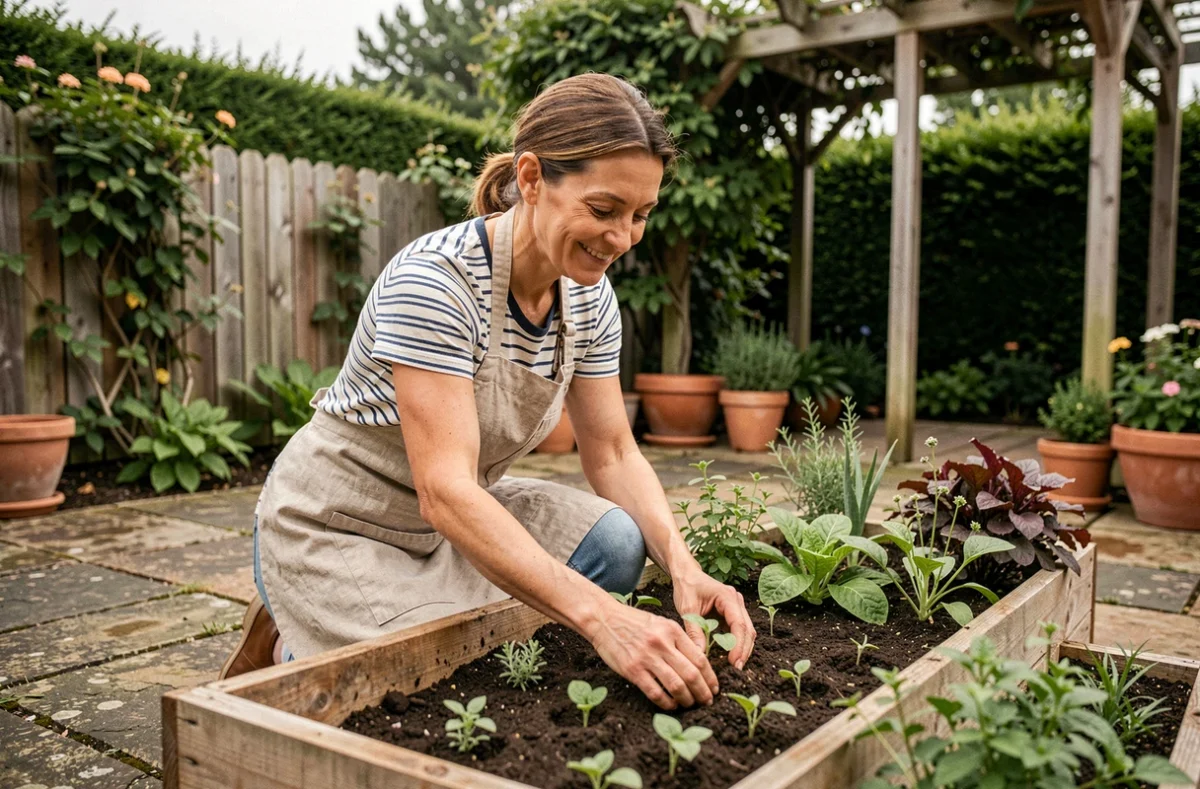
A south-facing plot, clay soil that cracks as early as June, local authority orders banning lawn watering for part of the summer: this is the real starting point for many garden landscaping projects.
Turning an outdoor space into a functional living area involves more than laying a patio and planting a few shrubs. You need to work with the climate, local water restrictions and soil conditions to create a garden that remains enjoyable all year round, not just in spring.
Designing a garden that doesn’t rely on watering
Water restrictions don’t apply only to lawns. Depending on the alert level set by the local authority order, they may also affect vegetable gardens, flower beds and all private green spaces. The rules vary from one municipality to another and from season to season, so check VigiEau and your local prefecture before making any plans.
The usual approach—lawn across the entire garden, automatic irrigation and a row of thuja hedges—creates a vulnerable outdoor space. As soon as watering is banned, the lawn turns yellow, the hedges suffer and the garden loses its appeal. A water-wise garden remains usable even during severe restrictions, making it a sustainable choice rather than a compromise.
In practice, replace some of the lawn with mineral mulch, evergreen ground cover (wild thyme, sedum, yarrow) or stabilised gravel areas. These surfaces need neither mowing nor watering, and they give the garden just as much visual structure as a lawn. For flower beds, choose plants suited to the local climate, such as lavender, ornamental grasses and shrubby salvias. They can get through the summer without intervention.
When you entrust this planning to a professional, Exp Nature’s landscaping service incorporates water efficiency from the design stage, tailoring the planting plan to the site’s water constraints.
Rainwater harvesting: include it in the plan from the start
Too often, people think about rainwater tanks only after the work is finished. They end up installing an undersized plastic water butt behind a shed, with poor connections.
Rainwater harvesting should be planned as a defining feature of the garden, not added as an afterthought. Identify suitable downpipes, size the storage according to the roof area and actual needs, and plan how water will be channelled to planting areas. A well-positioned underground tank can supply a gravity-fed drip irrigation system without an electric pump.
Creating functional zones in the garden
A garden you can really live in isn’t one uniform open space. Divide it into zones based on how you use it, with each zone designed around its own soil, sunlight and material requirements.
Patio and dining area: choosing the right surface material
The patio is a direct extension of the house. Its surface affects comfort, maintenance and the durability of the whole space. Composite decking withstands freeze-thaw cycles better than untreated natural wood, but it gets hotter in direct sunlight. Natural stone (sandstone, travertine) offers a good balance in terms of heat, provided you choose a non-slip finish.
- Exotic hardwood (ipe, cumaru) ages well without treatment, but its cost and environmental impact are worth considering. Check for FSC certification before buying.
- Outdoor porcelain tiles withstand frost, are easy to clean and come in formats that imitate wood or stone. Choose tiles thick enough for installation on pedestals.
- Exposed aggregate concrete is an affordable option for large areas, with a textured finish that blends into a natural garden.
Your choice of patio material should depend on sun exposure and maintenance costs, not just appearance. A west-facing patio in full sun needs a surface that won’t burn your feet in summer.
Play area and relaxation area: create separation without closing off the space
Define spaces with low-growing plants (clumps of ornamental grasses, rosemary hedges) or corten steel edging rather than rigid fences. The aim is to create visual cues that guide movement without breaking up the garden. A child playing ball shouldn’t send it into the dining area, but the boundary should still allow you to see through.
Outdoor lighting and evening comfort
A garden without lighting loses half its usable hours. Once the sun goes down, you head indoors, making your investment in outdoor landscaping less worthwhile.
Low-voltage solar lighting is enough to mark out paths and create an evening atmosphere. Think in three layers: path lighting (bollard lights along walkways), ambient lighting (string lights, recessed wall lights) and task lighting (an adjustable spotlight near the barbecue or outdoor kitchen).
Solar LED bollard lights can last for several hours after a day with good sunshine. For shaded areas, a low-voltage circuit powered from the house is more reliable. Bury the cable during earthworks to avoid having to redo the garden later.
Avoiding light pollution
Lighting that is too bright or poorly directed can cause glare, disturb neighbours and disrupt nocturnal wildlife. Point spotlights downwards, choose warm colour temperatures (around 2700 K) and install timers or motion sensors in areas used for walking.
Garden maintenance: plan for the real workload
The most common mistake in a landscaping project is designing a beautiful garden in May that becomes unmanageable by September. Every planted square metre means recurring maintenance: pruning, weeding, mulching and clearing fallen leaves.
Think in terms of hours per month rather than visual impact. A perennial bed needs thorough attention twice a year (late-winter pruning and autumn clean-up). An informal hedge grows without geometric trimming, unlike a laurel hedge, which needs pruning two or three times a year. Organic mulch (shredded branches, flax straw) reduces weeding but needs to be replenished annually.
Maintenance time varies considerably depending on soil type and local climate: well-drained sandy soil needs less work than clay soil, which compacts and encourages weeds after every rainfall. Adapt the planting plan to these conditions rather than choosing plants from a catalogue alone.
A functional, harmonious garden isn’t one that looks like a magazine photo in June. It’s one where you can still sit outside in October, where plants thrive without forced watering, and where maintenance fits the amount of time you actually want to spend on it.