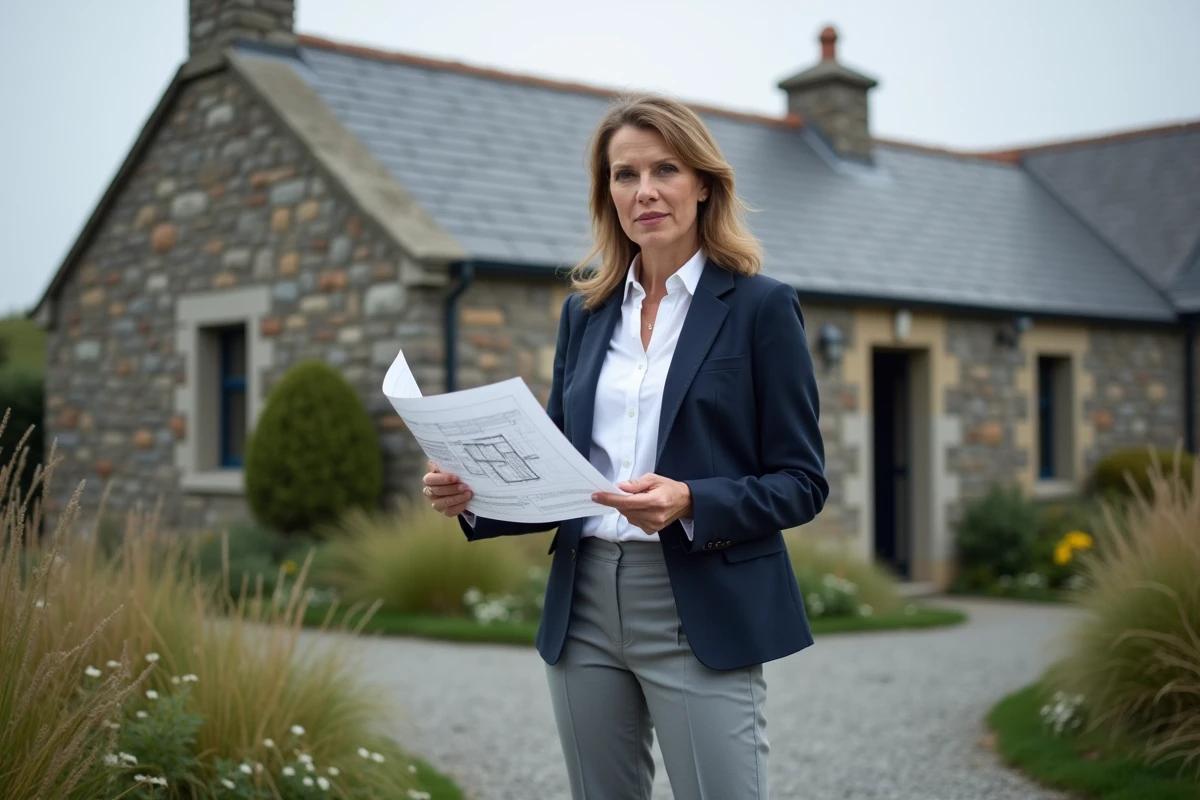
The Breton real estate market is no longer limited to new residential programs or houses with sea views. In recent years, less publicized dynamics have been reshaping the land landscape of the region: temporary occupations of wastelands, productive real estate linked to maritime sectors, regulatory constraints that force inventiveness. These changes create windows of opportunity for projects that break away from traditional models.
Transitional urban planning in Brittany: testing before building
Several Breton intercommunalities, particularly around Rennes and Brest, are now using industrial, port, or commercial wastelands as testing grounds. The principle is simple: before finalizing a project on a plot, temporary uses (third places, shared workshops, lightweight housing, student residences) are installed to observe what works.
This logic of transitional urban planning, formalized by the ANCT and the PUCA, allows communities to test actual demand on a given site. An unused warehouse hosts a coworking space for two or three years; if attendance confirms the need, the final program includes shared offices. If the test fails, the investment remains limited.
For a project developer, these arrangements provide access to urban land under unusual conditions. Temporary leases or occupancy agreements lower the entry barrier. In exchange, the occupant agrees to vacate the premises when the final project begins. It’s a short-term gamble that can lead to integration into the final program.
This approach is particularly appealing in cities like Brest, where redeveloping port areas offer significant spaces. Those looking to explore real estate offered by Veridictus will also find complementary insights on these new forms of land assembly in the region.

Productive real estate in Brest and Lorient: maritime sectors change the game
Productive real estate linked to renewable marine energies and the naval sector constitutes a distinct segment of the Breton market. It is primarily developing in the port areas of Brest and Lorient, where the needs of EMR companies differ radically from those of a traditional tertiary park.
- High-rise workshops capable of accommodating offshore wind turbine components or underwater structures several meters long
- Technical docks with direct water access for loading and testing, limiting eligible sites to a handful of port plots
- Hybrid buildings combining engineering offices, testing laboratories, and heavy logistics spaces on the same site
These programs create atypical real estate opportunities. An investor accustomed to residential properties may not spontaneously consider them, but the rental demand for these industrial assets is driven by long-term public contracts related to offshore wind development. Occupancy rates vary by site: some operators report rapid absorption of spaces, while others remain dependent on the political timelines of EMR tenders.
Goal of zero net artificialization: land constraints and land prices in Brittany
The regional implementation of the ZAN (zero net artificialization) goal is gradually changing the rules of the land game in Brittany. Each municipality must reduce its rate of consumption of agricultural and natural land, aiming to halve it within the next decade compared to the previous period.
The concrete consequences are already visible. Available building land is becoming scarce in coastal municipalities, where the Coastal Law already added restrictions. Pressure is increasing on already artificialized plots: wastelands, urban infill, former commercial sites. Their value is mechanically increasing.
For new program projects, this pushes developers towards densification and elevation rather than sprawl. In Rennes, Saint-Brieuc, or Quimper, operations to transform existing buildings (former offices converted into residences, warehouses rehabilitated into housing) are taking an increasingly prominent place in submitted permits.
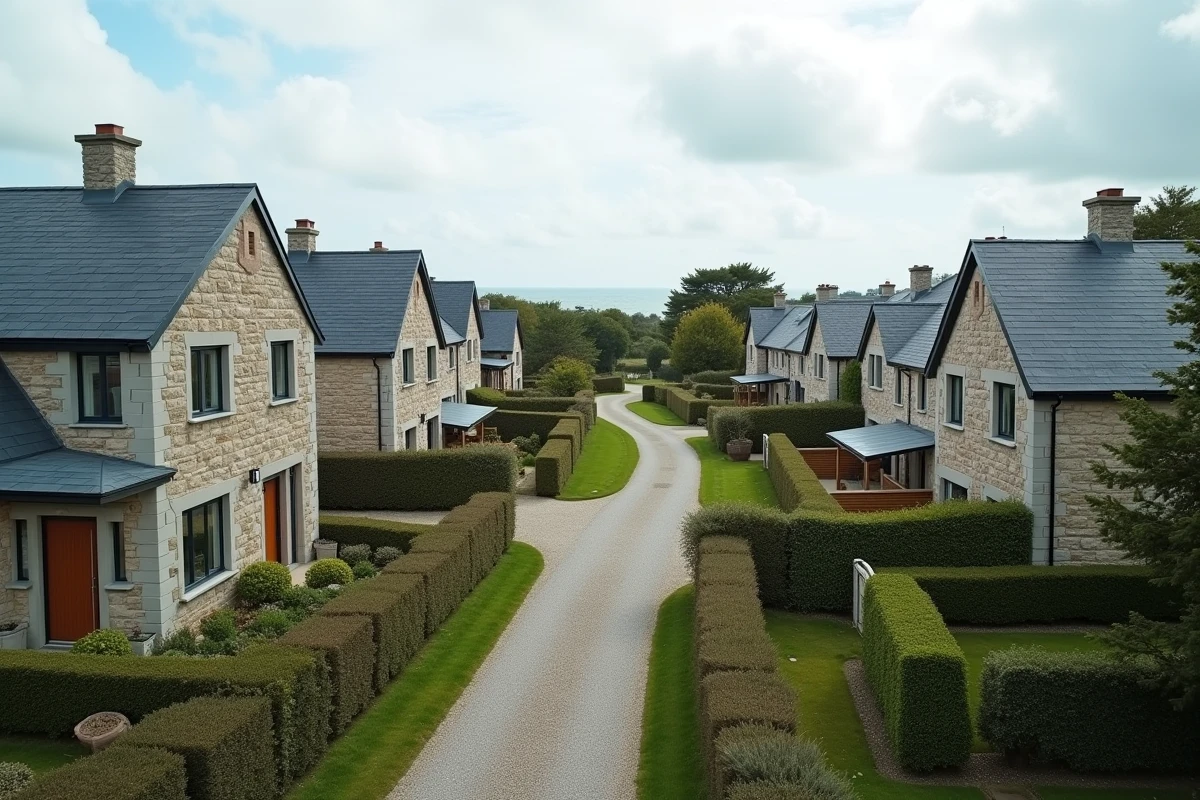
Rehabilitation versus new construction: the arbitration is tightening
Rehabilitation often costs more per square meter than new construction on vacant land. Structural surprises (asbestos, contaminated soils, insufficient foundations) inflate budgets. However, rehabilitated sites benefit from a location advantage: they are already in city centers or serviced activity zones.
The available data do not allow for a definitive conclusion on a systematic advantage of one model over the other. The calculation depends on the site, its condition, the planned program, and the available aids. The PTZ (zero-interest loan), for example, remains accessible in certain Breton areas for new acquisitions, but eligibility conditions are regularly changing and deserve verification on a case-by-case basis.
Which Breton cities to watch for a real estate project in 2025
Rennes attracts media attention, but other cities deserve careful examination. Lorient, driven by maritime sectors and an active student life, shows significantly lower prices per square meter than the Rennes metropolitan area. Brest benefits from a diverse economic fabric between defense, oceanographic research, and EMR.
The medium-sized towns of Finistère and Côtes-d’Armor, such as Saint-Brieuc or Lannion, present a different profile. Rental demand is more modest there, but land remains accessible, and rehabilitation projects find a regulatory framework that is sometimes more flexible than in tense coastal areas.
- Rennes: mature market, high prices, strong student and executive rental demand, numerous new programs
- Brest: changing port land, opportunities in productive real estate, still moderate residential prices
- Lorient: EMR and naval dynamics, neighborhoods in urban renewal, increasing land pressure
- Medium-sized inland towns: low entry tickets, rental yields to be verified according to actual local demand
The Breton market remains marked by strong heterogeneity between the coast and the interior, between metropolises and medium-sized towns. The most original opportunities are often found where traditional evaluation grids (price per square meter, gross yield) are insufficient to capture the value of a project linked to a local economic sector or a transitional urban planning scheme.