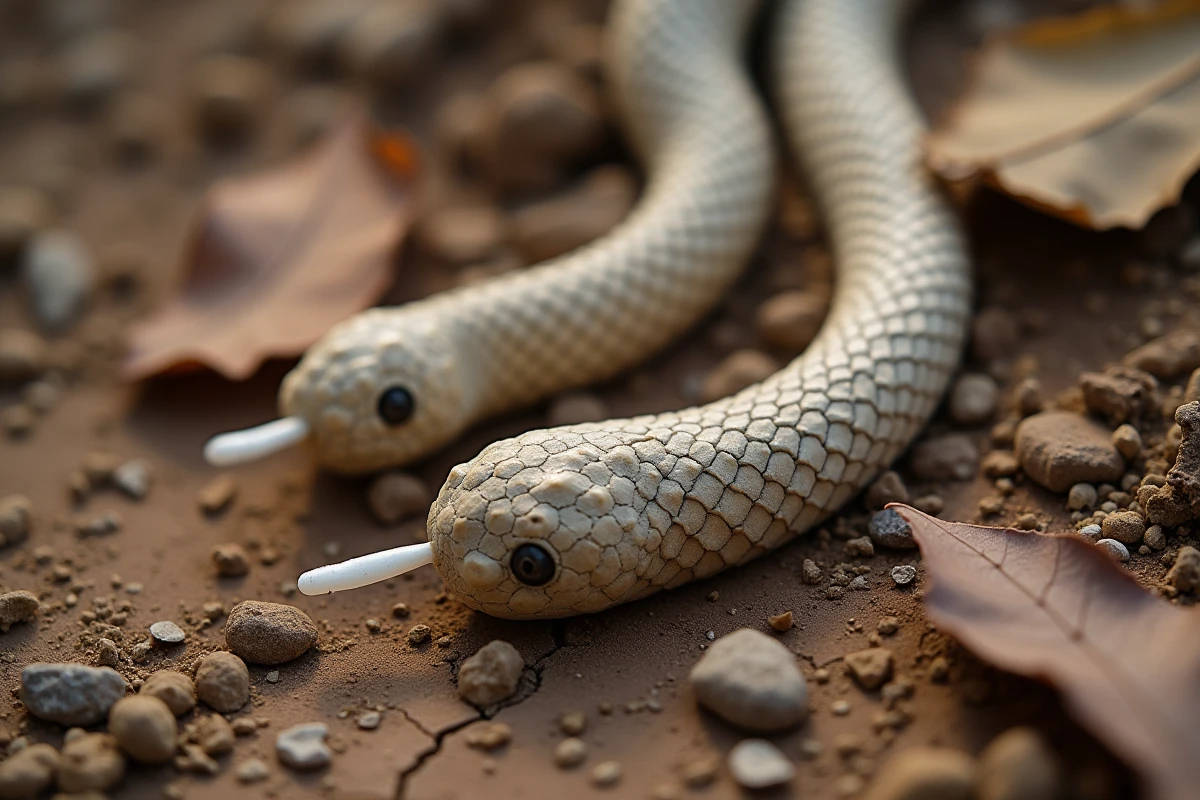
Snake droppings do not resemble those of any other animal commonly found in a garden or around a home. Their distinctive appearance, combining a dark solid part and a whitish fraction made up of urates, is the first distinguishing criterion. Correctly identifying these droppings not only confirms the presence of a snake but also helps assess the risk of bites or monitor the state of local wildlife.
Snake Droppings Compared to Rodent and Mustelid Droppings
The most frequent confusion occurs with the droppings of small mammals. A summary table helps outline the measurable morphological differences.
| Criterion | Snake (grass snake, viper) | Rat | Stone marten |
|---|---|---|---|
| General Shape | Irregular mass, sometimes elongated, often accompanied by a white area (urates) | Oval pellets, pointed ends | Slightly curved sausage shape |
| Typical Size | Variable depending on the species, from a few centimeters to longer for large specimens | Several millimeters to just over one centimeter | About eight to ten centimeters |
| Color | Dark brown to black, distinct white part | Dark brown, uniform | Brown, sometimes grayish |
| Visible Content | Remains of prey (hairs, feathers, bone fragments, scales) | Vegetable fragments, seeds | Fruit pits, hairs, feathers |
| Odor | Weak to moderate, musky | Strong, ammonia-like | Pronounced, foul |
The most reliable distinguishing feature remains the presence of white urates mixed with dark fecal matter. Reptiles excrete their solid and urinary waste simultaneously through a single opening, the cloaca. No mammal produces this characteristic two-colored mixture.
To delve deeper into the visual aspect of these droppings, a file dedicated to snake poop photo and identification details the differences among the most common species in France.
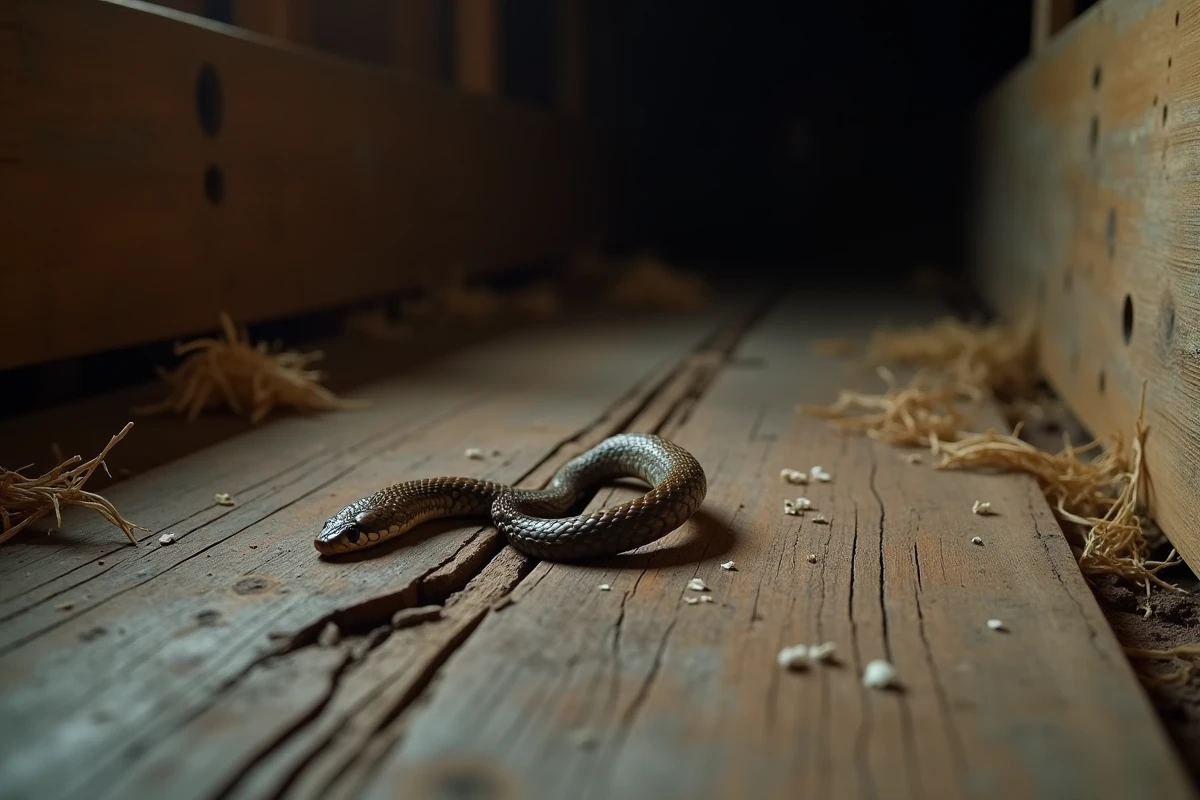
Contents of Snake Droppings and Signs of Local Presence
Observing what a snake dropping contains provides richer information than a simple confirmation of passage. The solid part contains undigested residues of consumed prey.
- Hairs from micromammals (voles, mice) indicate a grass snake or viper hunting in meadows and hedges
- Feathers or fragments of eggshell point to a tree snake or a species frequenting nesting boxes
- Scales from lizards or remains of amphibians often signal the smooth snake or the collar snake
This diet reveals the immediate ecosystem. A snake that consumes rodents actively regulates pest populations, which limits damage to crops, food supplies, and electrical cables in agricultural buildings.
Frequency and Location of Deposits
Snakes do not defecate after every meal in the same way as a mammal. The transit is slow: digestion can take several days, sometimes longer depending on the size of the prey and ambient temperature. Droppings are most often found near resting areas (under a sheet of metal, at the foot of a wall, in a compost pile).
Spotting several droppings in the same place over a few weeks suggests a regular thermoregulation site. This type of data directly serves reptile wildlife monitoring protocols.
Snake Droppings as a Tool for Prevention and Biodiversity Monitoring
The value of these droppings goes beyond simple identification. Two areas benefit directly: the prevention of human risks and the protection of species.
Prevention of Bite Risk
Finding snake droppings in a frequented area (garden, terrace, poolside) provides an early warning signal. Rather than encountering the animal face-to-face, this discovery allows for behavioral adjustments: wearing high shoes while gardening, clearing potential hiding spots (boards on the ground, tarps), and monitoring nearby wet areas.
The presence of droppings does not mean an immediate danger. The vast majority of snakes in mainland France are grass snakes, which are non-venomous. Identifying the species by the contents of its droppings helps distinguish a grass snake from a viper even before encountering the animal.
Health Risks Related to Droppings
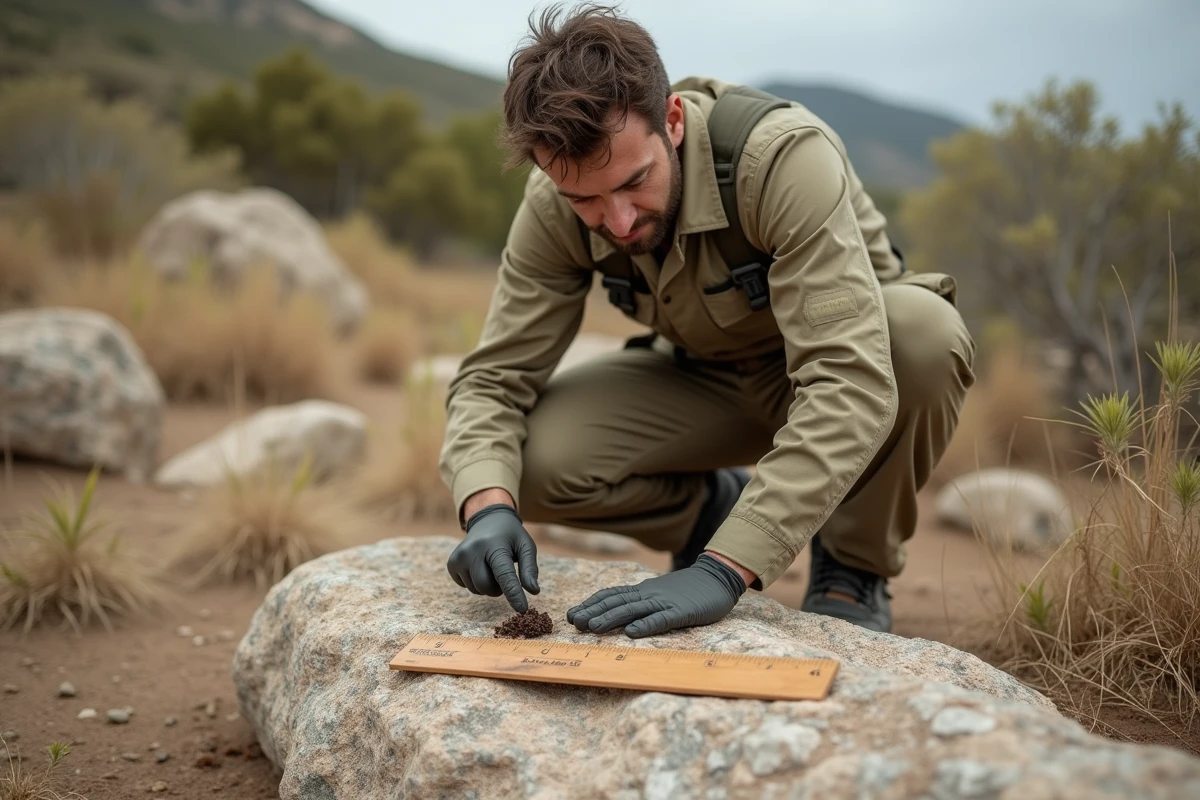
Reptile droppings can contain salmonella. The risk remains limited outdoors but increases if the droppings are found near a vegetable garden, playground, or domestic water source. Handling these residues requires wearing gloves and thoroughly washing hands.
Environmental DNA and Citizen Science
Biodiversity monitoring programs now exploit residual DNA present in snake droppings. Environmental DNA allows for species identification without ever seeing the animal, a breakthrough that significantly simplifies herpetological inventories. Pilot projects in Europe and North America show that samples taken by the general public, combined with photos, are sufficient to feed reliable databases.
This protocol also applies to monitoring invasive species. In Florida, wildlife protection agencies systematically use droppings to map the progression of the Burmese python through analysis of stomach contents (consumed prey) and approximate dating based on the degree of desiccation.
Identifying Snake Droppings in the Garden: A Practical Method
When faced with a suspicious dropping, three criteria are sufficient for a quick determination.
- Look for the white component (urates): if present, reptilian origin is almost certain
- Examine the visible content: clumped hairs, bone fragments, or scales point towards a snake rather than a bird (which also produces two-colored droppings, but with a more liquid texture)
- Note the location: a deposit under a flat stone, a sheet of metal, or a wood pile corresponds to the thermoregulation habits of snakes
Confusion with bird droppings is the main trap. Bird droppings are more liquid and the white part largely dominates the dark part, whereas in snakes, both fractions remain distinct but of comparable volume.
Keeping a snake in your garden provides a measurable benefit for local ecological balance. Its droppings, far from being a mere inconvenience, confirm that a natural predator of rodents is operating in the area. Removing or ignoring them amounts to depriving oneself of a free indicator of the health of the surrounding biodiversity.