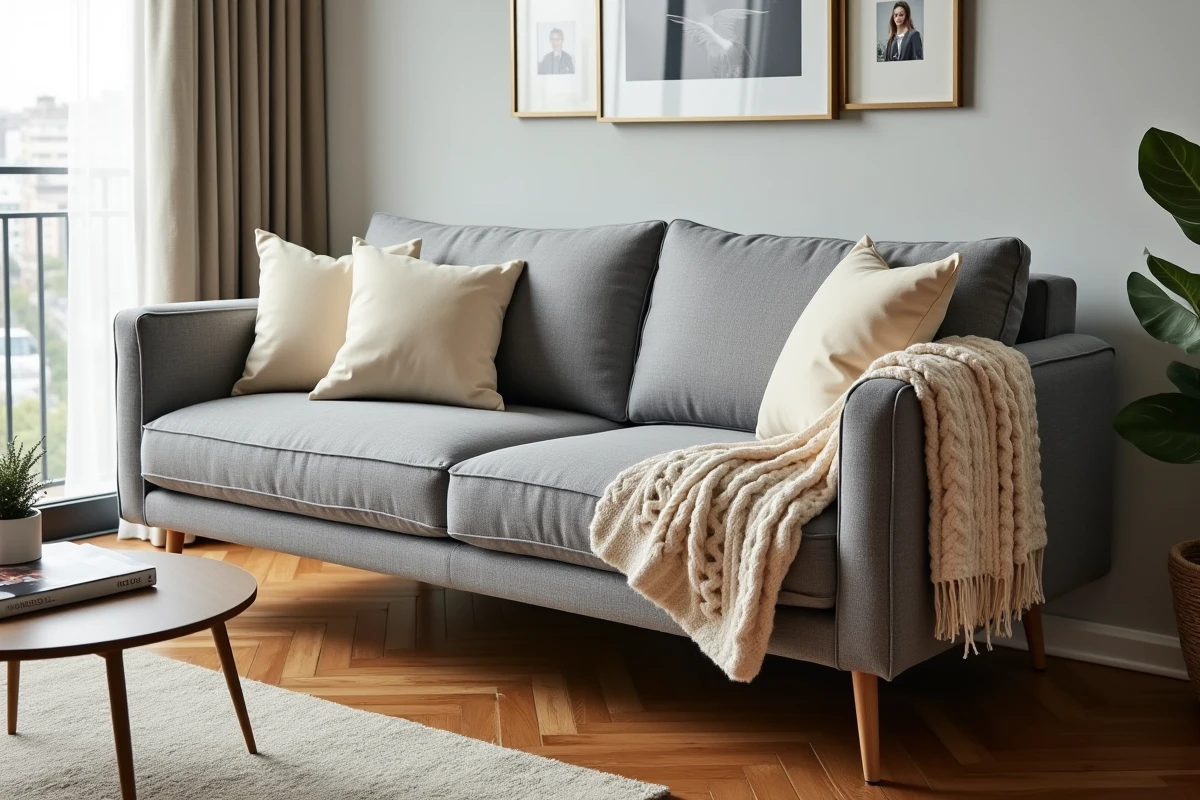
The clic-clac remains one of the most sold convertible furniture pieces in France, driven by the constraints of small spaces and the versatility of the format. Choosing a clic-clac for your living room involves making decisions based on technical criteria that go beyond just price or color. Foam density, bed frame structure, mechanism durability, fire safety standards: these parameters determine the furniture’s lifespan and the actual quality of the sleeping surface.
Clic-clac for daily sleeping: what the recent segmentation of ranges changes
Since 2023-2024, several French brands (Dunlopillo, Bultex, Rapido, among others) have explicitly segmented their ranges between occasional sleeping and daily sleeping. This distinction, mentioned directly on product sheets, is based on measurable criteria: minimum guaranteed mattress density, number of tested opening/closing cycles, seat thickness.
General guides often contrast clic-clac and convertible sofas without delving into these sub-ranges. A clic-clac labeled “daily sleeping” by the manufacturer, however, incorporates a more demanding specification regarding mattress durability over time and mechanism robustness.
To identify the right model based on your actual usage, C Ma Déco’s clic-clac guide details the selection criteria suited to each frequency of use.
Field feedback varies on the actual durability of these internal labels: a clic-clac labeled “daily” by a large retail chain does not necessarily meet the same requirements as a model from a specialized manufacturer. Checking the foam density (expressed in kg/m³) and mattress thickness remains more reliable than relying on a marketing mention.

Mattress density and type of bed frame: the two technical criteria not to overlook
The density of the foam directly affects the comfort and longevity of the clic-clac. A mattress that is too low in density will sag after a few months of regular use. Specialized manufacturers recommend a significantly higher density for frequent sleeping compared to occasional use, but the thresholds vary from one brand to another.
The type of foam also plays a role: high-resilience polyurethane foam, memory foam, or latex offer different sensations and lifespans. HR foam (high resilience) remains the most common compromise in the clic-clac segment.
Slatted bed frame or metal bed frame
The bed frame influences comfort as much as the mattress itself. Two main families coexist:
- The wooden slatted bed frame (often made of multilayer beech) offers better mattress ventilation and a softer support. It absorbs some of the movements, which reduces the feeling of rigidity.
- The metal mesh bed frame, less expensive, provides firmer support but promotes more moisture retention under the mattress.
- Some high-end models combine slats and integrated suspension to approach the comfort of a real bed, at the cost of slightly greater bulk.
The choice of bed frame also determines the mattress ventilation, an underestimated point that affects long-term hygiene.
Fire safety standards and upholstery fabrics: a forgotten criterion in comparisons
The European standards EN 1021-1 and EN 1021-2 regulate the flammability of upholstered furniture. In France, these requirements apply particularly in establishments open to the public (ERP) and in certain rental uses (furnished rentals, student residences, communities).
For individuals, these standards are not mandatory in private domestic use. However, a clic-clac intended for furnished rental must comply with these fire safety requirements. Compliant covers and upholstery can be identified by a normative mention on the product label.
This point is often absent from most consumer buying guides. If you are furnishing a property intended for seasonal rental or collective use, always check the compliance of the upholstery before purchase.
Dimensions of the clic-clac and space constraints in a living room
The clic-clac unfolds towards the front, which requires sufficient clearance in front of the wall. This constraint differentiates it from the BZ, which unfolds in an accordion style and takes up less depth when opened.
The sleeping surface of a standard clic-clac is around a two-person format, but the exact dimensions vary significantly from one manufacturer to another. Measuring the available space in the unfolded position, and not just in the seated position, helps avoid unpleasant surprises.
Choosing the upholstery based on the living room’s usage
The choice of fabric depends more on daily use than on decorative style:
- Microfiber and water-repellent polyester fabrics are more resistant to stains and are easy to clean, a clear advantage in a family living room.
- Cotton and linen, more pleasant to the touch, require more regular maintenance and show marks more quickly.
- Removable and machine-washable covers extend the lifespan of the furniture and simplify hygiene, especially in cases of frequent sleeping.
A removable and machine-washable cover significantly simplifies maintenance and is often a more determining choice criterion than the color of the fabric.
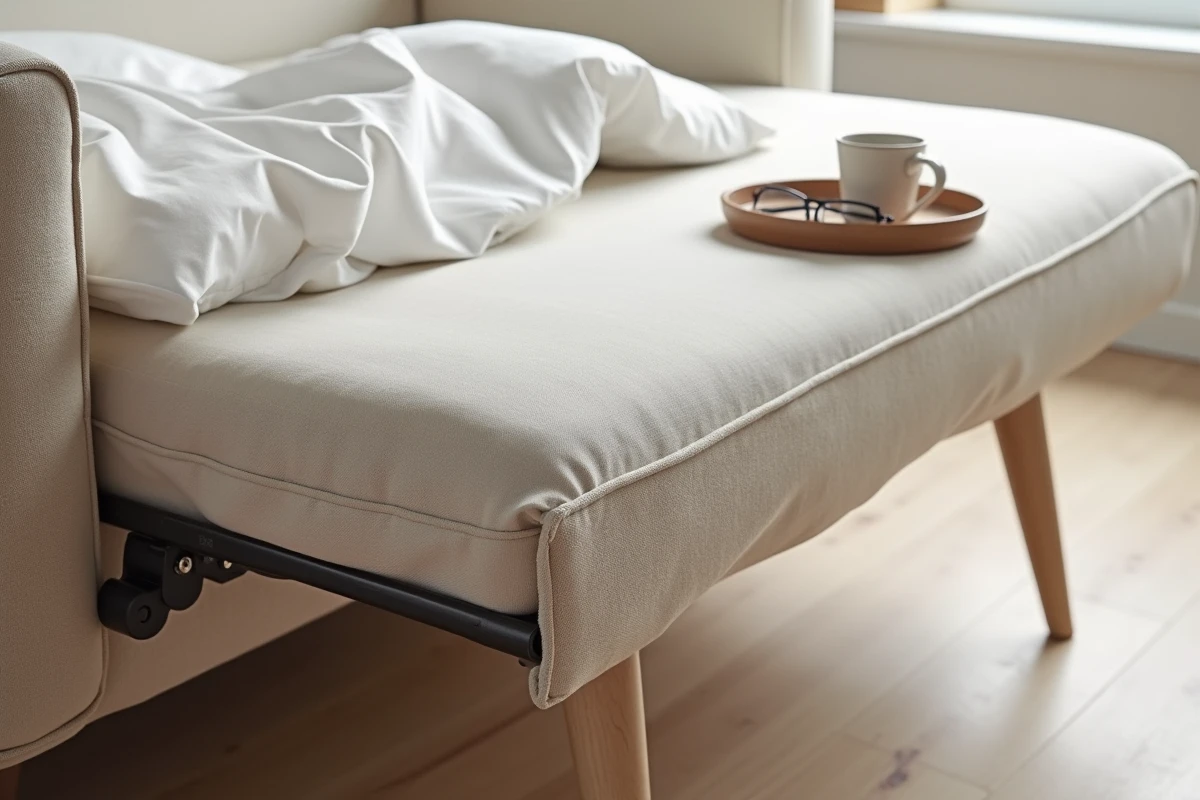
The choice of a clic-clac hinges on precise technical criteria: foam density, type of bed frame, compliance of the upholstery with usage standards, and actual dimensions in the unfolded position. Prioritizing the quality of the mattress and bed frame rather than the design or entry price remains the best guarantee of furniture that lasts over time, whether for occasional sleeping or daily use.