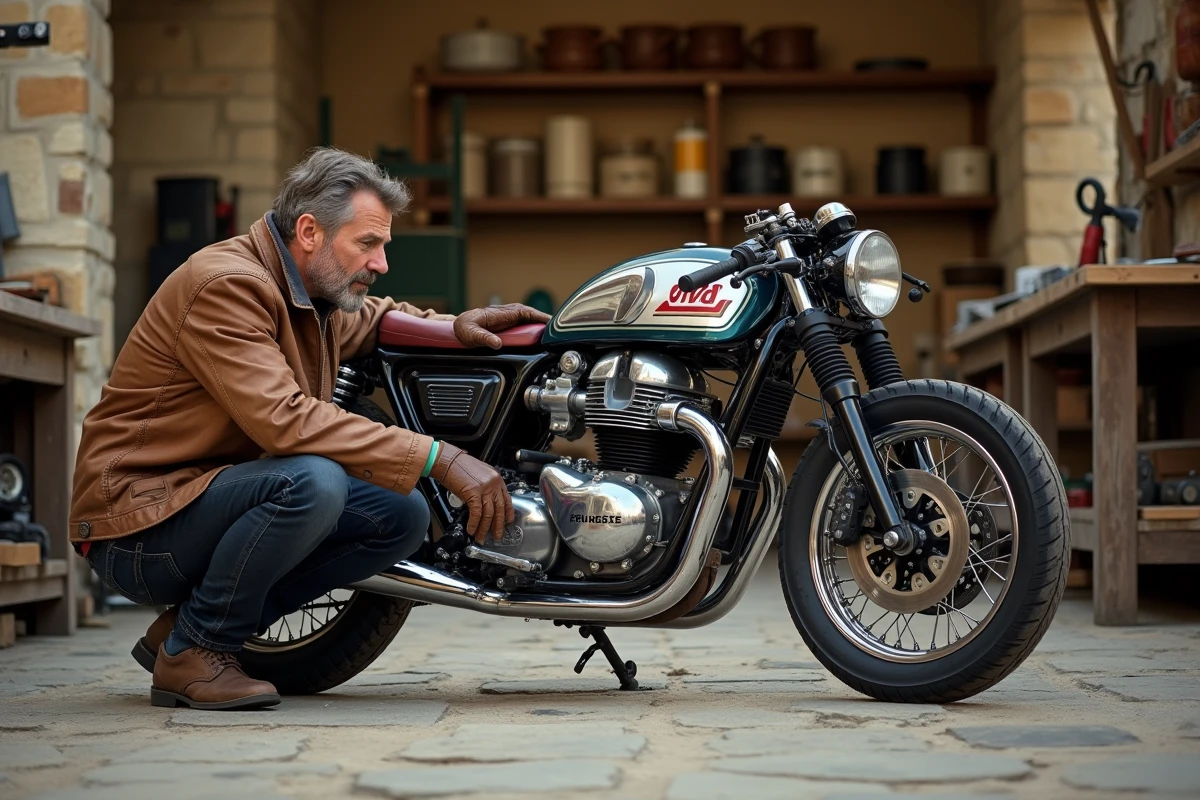
A vintage motorcycle refers to a model produced several decades ago, whose mechanics, frame, and aesthetics reflect the technical standards of their time. In France, this category includes both original machines, preserved or restored, and recent neo-retro models that adopt an old design based on current technology. The distinction between these two worlds affects the budget, maintenance, and regulatory constraints that each owner faces.
Electric conversion of classic motorcycles: a developing French sector
Since 2023, several French workshops have been offering electric conversion of vintage motorcycles with road approval granted on a case-by-case basis by the DREAL. The company Motowatt, for example, has introduced a conversion kit for older Honda CB models, allowing the frame and retro look to be retained while replacing the combustion engine with an electric motor.
This approach directly addresses the traffic restrictions in ZFE-m zones. Rather than storing an old machine, the conversion reopens access to the city centers of Paris or Lyon. The process remains artisanal: each reception file goes through the DREAL, which extends the timelines and limits the volumes. Specialized resources assist enthusiasts in this type of endeavor, particularly on https://motorcycleboy.fr/, where the vintage motorcycle universe is explored from various angles.
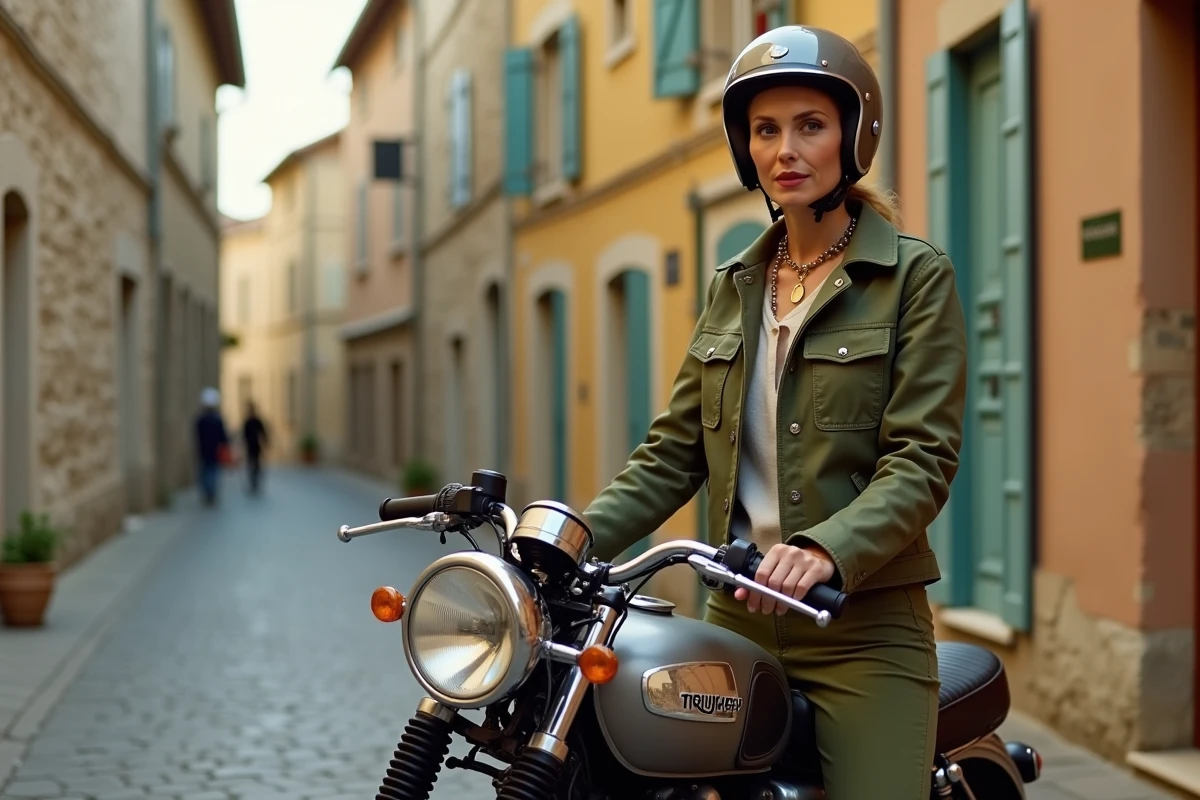
The mechanical outcome divides purists. The instant torque of an electric motor radically changes the motorcycle’s behavior, and the silence of operation removes part of the sensory experience. For others, riding in the city with an old bike without Crit’Air restrictions justifies the compromise.
Crit’Air reform and collector motorcycles: what the regulations are preparing
The ZFE-m reform announced in spring 2024 includes a revision of the Crit’Air system. The government has initiated a specific reflection on the treatment of collector vehicles and leisure uses. The FFVE (French Federation of Vintage Vehicles) has been consulted as part of the preparatory work.
For vintage motorcycle owners, the stakes are concrete. A machine from the 70s or 80s is currently assigned a Crit’Air 4 or 5 sticker, or even no classification, which prohibits circulation in metropolitan areas that have activated their ZFE. The collector registration offers a derogatory status in certain municipalities, but its application varies from one urban area to another.
Points to watch before the regulations come into effect
- Check if the municipality of residence applies a derogation for vehicles with collector registration, as not all ZFEs recognize it
- Follow announcements from the FFVE, which regularly publishes updates on the progress of the reform and its consequences for vintage two-wheelers
- Anticipate the insurance question: some contracts specific to collector vehicles impose a limited annual mileage, which may conflict with daily use
As long as the reform is not finalized, the regulatory ambiguity primarily penalizes urban owners who use their vintage motorcycle as their main means of transport.
Participatory garages and community workshops: vintage motorcycle maintenance at lower cost
Since the end of the health crisis, participatory garages have attracted a growing number of members among owners of classic motorcycles. The principle is simple: an equipped space (lift, tools, compressor) is made available for a fee, and a designated mechanic assists members with complex operations.
For a vintage motorcycle, this format offers a direct advantage. Original spare parts are still available, but their installation sometimes requires expertise that modern dealerships no longer possess. In a community workshop, the transfer of skills between enthusiasts replaces the traditional garage estimate.
What a participatory garage concretely allows
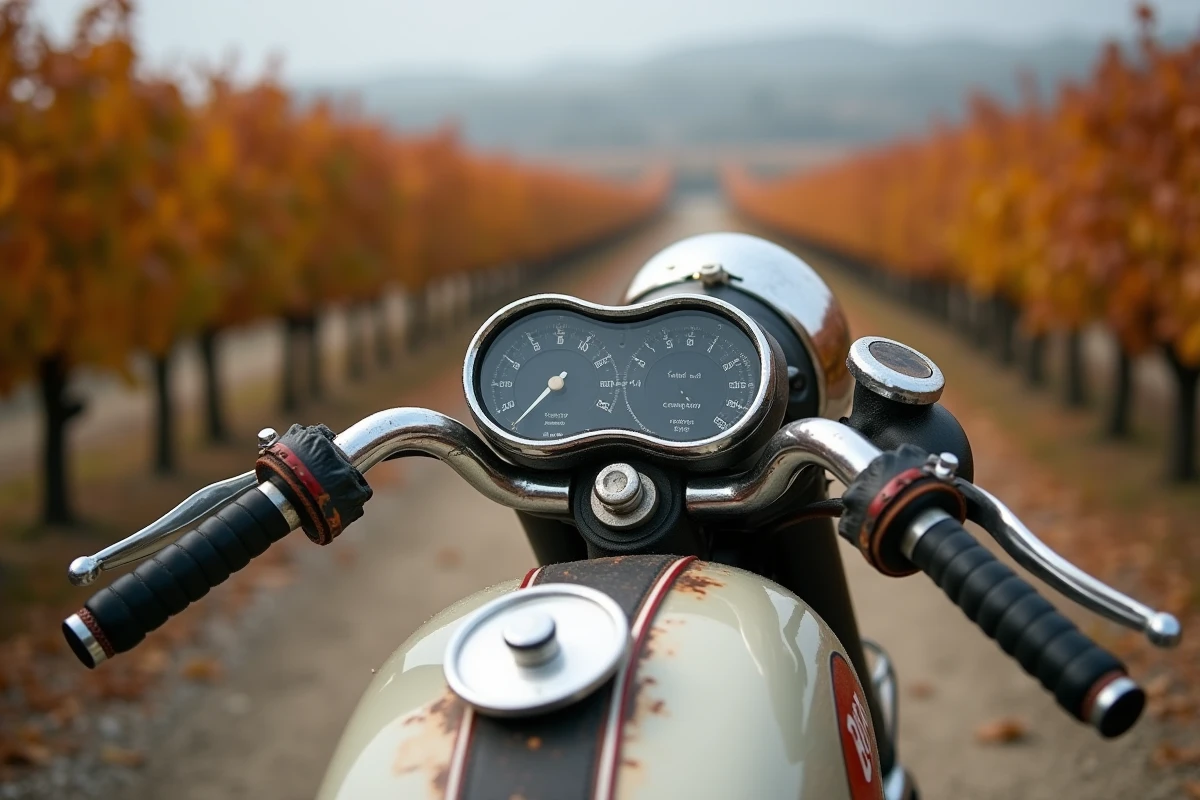
The most common operations involve carburation (cleaning and adjusting needle carburetors), replacing fork seals, and restoring aging electrical circuits. On a 70s Japanese bike, the original wiring harness is often weakened by oxidation, and doing it yourself with technical support divides the cost compared to a specialized workshop.
These structures are mainly developing in medium-sized urban areas. They complement the offerings of clubs affiliated with the FFVE, which primarily organize outings and gatherings rather than technical support.
Neo-retro and original vintage models: two markets with distinct logics
The vintage motorcycle market in France is structured around two segments that do not respond to the same purchasing criteria. Neo-retro models (Triumph Bonneville, Royal Enfield Classic, BMW R nineT) are new machines equipped with ABS, electronic fuel injection, and compliant with current emission standards. Their maintenance follows a classic dealership circuit.
An original motorcycle from the 60s to 80s requires a completely different approach. Sourcing parts goes through specialized networks, swap meets, or small-batch parts manufacturers. The value of these machines fluctuates based on the condition of the documentation (service book, invoices), the rarity of the model, and the quality of the restoration.
- On a neo-retro model, the maintenance budget remains predictable and covered by the manufacturer’s warranty in the first years
- On an old bike, each intervention can reveal a hidden problem (internal tank corrosion, camshaft wear, seized rings) that increases the bill
- Customization in the style of café racer or scrambler applies to both categories, but modifying an original model can affect its collector value if the changes are not reversible
The choice between these two worlds depends as much on the relationship to mechanical risk as on the pleasure sought. Riding a machine whose every part has a technical history does not offer the same satisfaction as piloting a perfectly calibrated neo-retro straight from the factory. Both approaches coexist at French gatherings, and the line between collection and daily use continues to blur as urban constraints reshape motorcyclists’ habits.