You have been losing your hair for several years and are considering a hair transplant. The project is ready, and the budget is set. The most delicate question remains: who to trust with your scalp? The choice of specialist for a hair transplant determines the result as much as the technique used. Two practitioners offering the same FUE method can deliver radically different results depending on their experience, their team, and their approach to planning the procedure.
Hair Transplant: What Post-Operative Follow-Up Reveals About a Clinic’s Quality
Most articles compare clinics based on their techniques or prices. Few focus on a point that reveals much more: the duration and rigor of post-operative follow-up.
A serious clinic schedules follow-up consultations over several months after the procedure. This follow-up is not limited to checking the healing process. It serves to evaluate hair regrowth, detect any potential shock loss, and adjust care if necessary.
Why is this criterion so telling? Because a facility that commits to long-term follow-up accepts being judged on its actual results, not just on the surgical act. A post-operative follow-up lasting beyond twelve months distinguishes specialized clinics from generalist facilities. Some even offer standardized photographic assessments at fixed intervals to objectively track progress.
Before signing, ask a simple question: how many follow-up appointments are included in the package, and over what duration? If the answer remains vague, it’s a warning sign. To better understand what a hair medical protocol on Santé 365 covers, you can consult resources that detail each step of the patient journey.

Surgeon Qualification and the Doctor’s Actual Role During Hair Transplant
You may have noticed that some clinics highlight the name of a renowned surgeon, but the procedure is largely carried out by technicians. This operation is not unusual in itself: the extraction and implantation of grafts involve an entire team for several hours.
The question to ask is not “who performs the transplant?” but rather: what is the exact role of the doctor at each stage of the procedure? In some facilities, the surgeon draws the hairline, supervises the extraction, and then delegates the implantation to trained assistants. In others, they perform the implantation incisions themselves, which influences the density and angle of each graft.
What You Can Check Before the Consultation
- The practitioner’s diploma: a surgeon specialized in hair transplant is generally registered with the Medical Council, with a qualification in surgery or dermatology. Check this registration in the public directory of the Council.
- Membership in recognized professional organizations: IAHRS (International Association of Hair Restoration Surgery) certification is not mandatory in France but indicates advanced specialization in hair restoration.
- The number of procedures performed per year: a practitioner who performs transplants daily develops a dexterity that a doctor who only does a few per month cannot achieve.
The surgeon’s experience is measured by the volume of procedures and years of dedicated practice, not by honorary titles.
FUE, DHI, Robotic Techniques: Choose Based on Your Case, Not Trends
The FUE (Follicular Unit Extraction) technique has become the standard. It involves harvesting grafts one by one from the donor area, usually the back of the head. The DHI technique uses an implanter pen (Choi type) that allows for direct implantation without prior incision.
Should you choose your clinic based on the technique offered? Not exactly. The best technique is the one that the surgeon masters best for your type of alopecia. A practitioner skilled in classic FUE will achieve better results than a less experienced practitioner in DHI, even if the latter is presented as more advanced.
What matters during the consultation is the doctor’s ability to explain why they recommend a particular approach for your specific case. A good specialist evaluates the density of your donor area, the fineness of your hair, the extent of baldness, and its likely progression. They may sometimes refuse to intervene if the ratio between the donor area and the area to be covered is unfavorable.

Signs of a Quality Consultation
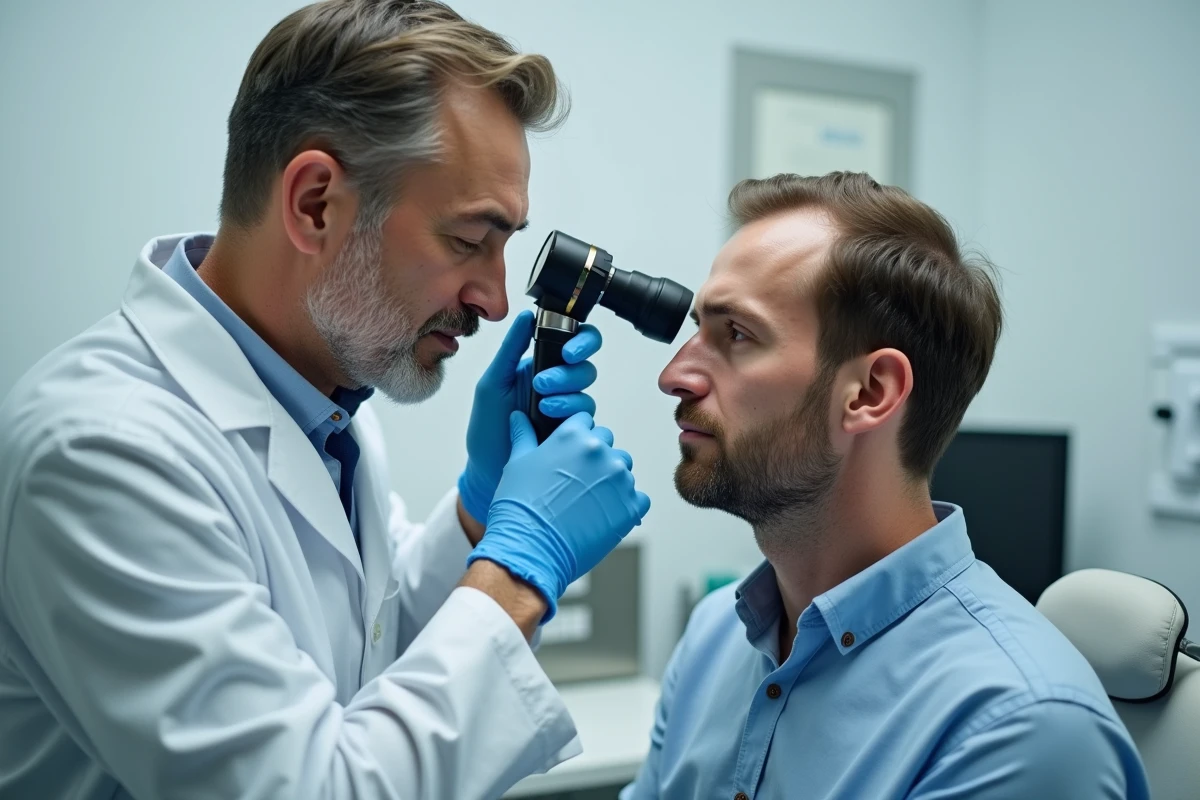
During the first appointment, observe if the practitioner takes the time to measure hair density with a trichoscope. A serious consultation lasts at least thirty to forty-five minutes and includes an examination of the scalp, a discussion about your expectations, and a realistic projection of the result.
If you are offered a number of grafts before your head has even been examined, move on. The transplant plan is built on a diagnosis, not on a price per graft.
Hair Transplant in Turkey or France: Price Doesn’t Tell Everything
Hair tourism to Turkey remains massive, driven by attractive packages. The price of a transplant there is often significantly lower than that practiced in France. This difference is explained by the cost of labor, the volume of patients treated, and lower operating expenses.
The all-inclusive package (procedure, hotel, transfers) may seem reassuring. In practice, a low package price sometimes hides a shortened intervention time and limited post-operative follow-up. Some Turkish clinics treat multiple patients per day in the same room, with a surgeon moving from one patient to another.
This does not mean that all clinics in Turkey should be avoided. Some have a solid reputation and highly qualified teams. The challenge is to identify these reliable structures among an overwhelming offer. Here’s what helps to sort through:
- Ask for the name of the surgeon who will perform the procedure and verify their qualifications, not just those of the medical director listed on the website.
- Request a detailed quote mentioning the number of grafts expected, the technique used, and the follow-up consultations included.
- Look for before/after photos of patients with a similar baldness profile to yours, with pictures taken more than a year post-operation.
The choice between France and abroad does not solely depend on the budget. Proximity facilitates follow-up, management of potential complications, and legal recourse in case of issues. A disappointing result after a hair transplant is difficult to rectify, regardless of the country.
Choosing a specialist for a hair transplant comes down to comparing concrete commitments: duration of follow-up, role of the surgeon during the procedure, quality of the initial diagnosis. Flattering result photos and displayed prices do not replace a thorough consultation with a practitioner who takes the time to say no when the conditions are not met.